Many people ask, is bronchitis contagious when someone in the family or workplace starts coughing constantly. Bronchitis is a common respiratory condition that causes inflammation in the bronchial tubes, which carry air to the lungs. This inflammation can lead to coughing, mucus production, wheezing, chest discomfort, and fatigue. Whether bronchitis is contagious depends on the type of bronchitis a person has.
There are two main forms of bronchitis: acute bronchitis and chronic bronchitis. Acute bronchitis is usually caused by viruses and can spread from person to person. Chronic bronchitis is a long-term condition often linked to smoking or environmental irritants and is generally not contagious.
Understanding how bronchitis spreads, how long it lasts, and what steps to take can help protect you and those around you. In this guide, we will explain everything you need to know in a clear and SEO-friendly way.
What Is Bronchitis?
Bronchitis occurs when the bronchial tubes become swollen and irritated. This makes it harder for air to move freely and often triggers a persistent cough.
Common symptoms of bronchitis include:
- Frequent coughing
- Mucus or phlegm production
- Sore throat
- Chest tightness
- Mild fever
- Shortness of breath
- Fatigue
- Wheezing
Bronchitis can feel similar to a cold or flu, which is why many people confuse the illnesses.
Is Bronchitis Contagious?
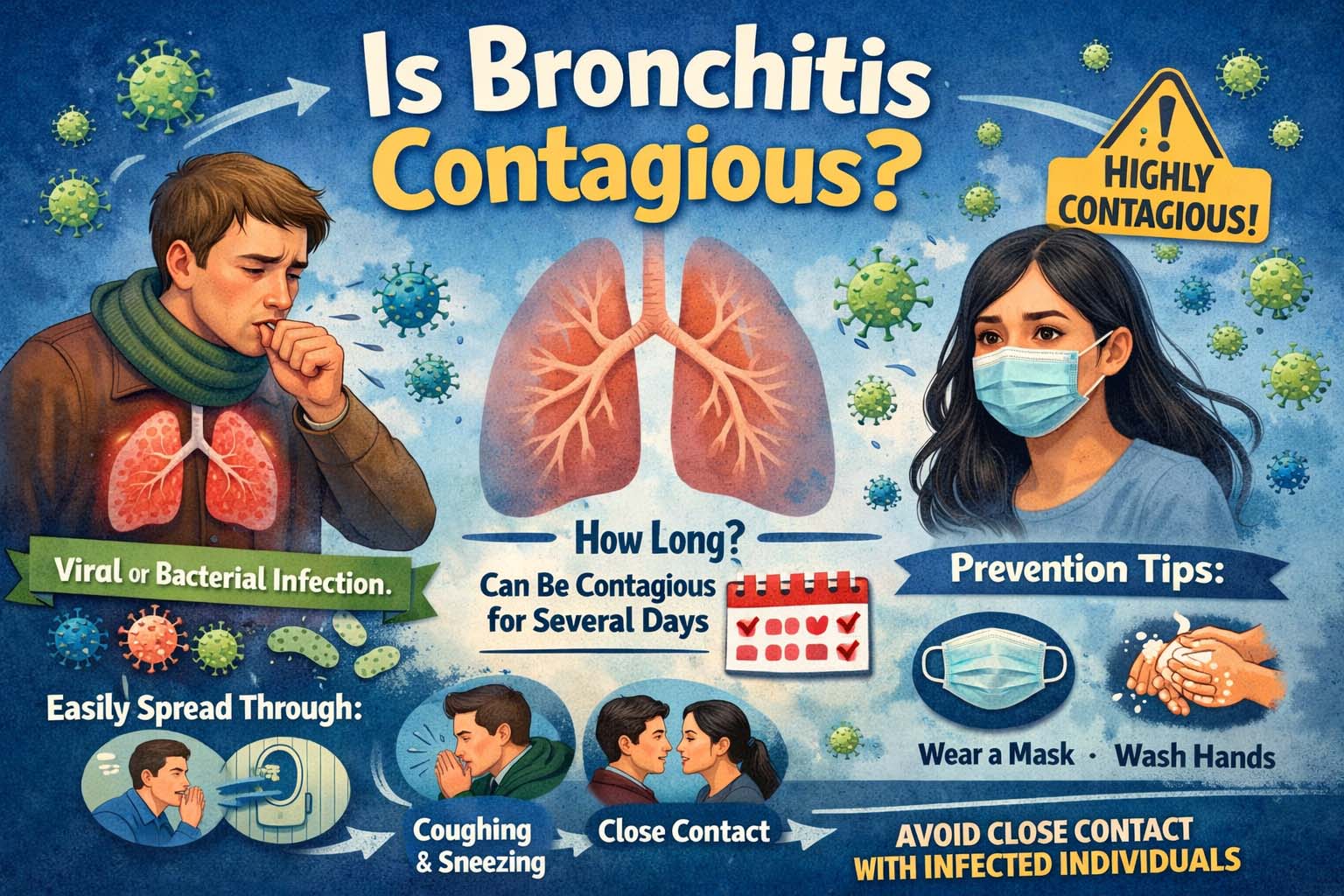
The answer to is bronchitis contagious depends on the cause. If bronchitis is caused by a viral or bacterial infection, it can be contagious. If it is caused by smoking, allergies, or pollution, it is usually not contagious.
Acute bronchitis often develops after a cold, flu, or respiratory infection. In these cases, the virus causing the illness can spread through:
- Coughing
- Sneezing
- Touching contaminated surfaces
- Close contact with infected people
Chronic bronchitis, however, is usually part of chronic obstructive pulmonary disease (COPD) and does not spread between people.
Is Acute Bronchitis Contagious?
Many patients ask, is acute bronchitis contagious because acute bronchitis is the most common type. Yes, acute bronchitis can be contagious when it is caused by viruses such as influenza, rhinovirus, or coronavirus.
Acute bronchitis often starts with symptoms similar to a common cold. After a few days, the infection moves into the bronchial tubes, leading to persistent coughing and mucus production.
Since viruses spread easily, people with acute bronchitis should:
- Stay home when sick
- Cover coughs and sneezes
- Wash hands frequently
- Avoid close contact with others
- Disinfect shared surfaces
The bronchitis itself is inflammation, but the virus causing it is what spreads.
How Contagious Is Bronchitis?
Another common question is, how contagious is bronchitis compared to other respiratory illnesses. Bronchitis can be moderately contagious if caused by a virus. The level of contagiousness depends on:
- The type of virus causing the infection
- How often the infected person coughs or sneezes
- Hygiene habits
- Indoor ventilation
- The immune systems of people nearby
For example, if someone with viral bronchitis coughs in a crowded office without covering their mouth, the virus can spread more easily. In open spaces with fresh air and proper hygiene, the risk is lower.
Children, older adults, and people with weakened immune systems may be more likely to catch respiratory infections linked to bronchitis.
How Long Is Bronchitis Contagious?
A very important question is, how long is bronchitis contagious after symptoms begin. In most cases of viral bronchitis, a person is contagious for a few days before symptoms appear and for up to a week after symptoms start.
Some people may remain contagious longer depending on:
- The virus involved
- Severity of illness
- Immune response
- Presence of fever
- Ongoing coughing and mucus production
Even after the infection is no longer contagious, the cough can remain for several weeks due to lingering airway irritation.
That means a person may still cough but no longer spread germs.
Is Bronchitis Contagious After 1 Week?
Many people wonder, is bronchitis contagious after 1 week of being sick. Often, the highest risk of spreading infection happens during the first few days. After one week, many people are less contagious, especially if fever is gone and symptoms are improving.
However, some viruses can still spread beyond one week, especially if:
- Symptoms are severe
- Fever continues
- Mucus remains heavy
- Immune system is weak
- Doctor confirms ongoing infection
To be safe, continue good hygiene until symptoms improve significantly.
Causes of Bronchitis
Bronchitis can develop from several causes:
Viral Infections
This is the most common reason for acute bronchitis. Viruses that cause colds and flu frequently trigger bronchial inflammation.
Bacterial Infections
Less common but possible. Some bacterial infections can lead to bronchitis and may require antibiotics.
Smoking
Cigarette smoke damages airways and is a major cause of chronic bronchitis.
Air Pollution
Dust, chemicals, fumes, and polluted air may irritate lungs.
Allergies
Environmental allergens can inflame airways and worsen symptoms.
Symptoms to Watch For
Symptoms of bronchitis often include:
- Persistent cough
- Yellow, green, or clear mucus
- Sore throat
- Mild fever
- Body aches
- Wheezing
- Tiredness
- Chest discomfort
Seek medical help if symptoms include:
- High fever
- Trouble breathing
- Bloody mucus
- Symptoms lasting more than 3 weeks
- Repeated bronchitis episodes
How to Prevent Bronchitis from Spreading
If someone around you has contagious bronchitis, these steps can help reduce risk:
Wash Hands Often
Cover Coughs and Sneezes
Use tissues or cough into your elbow.
Avoid Sharing Items
Do not share cups, utensils, towels, or personal items.
Improve Ventilation
Open windows or use air filtration indoors.
Wear a Mask if Needed
Masks can help reduce spread during coughing illness.
Stay Home While Sick
Resting at home helps recovery and protects others.
Treatment for Bronchitis
Treatment depends on the cause:
Rest and Fluids
Hydration helps loosen mucus and support healing.
Humidifiers
Moist air can ease coughing and irritation.
Over-the-Counter Medicine
Pain relievers or cough remedies may help symptoms.
Prescription Medicine
If bacterial infection is present, a doctor may prescribe antibiotics.
Avoid Smoking
Smoking worsens bronchitis and delays recovery.
When to See a Doctor
You should contact a healthcare provider if:
- Cough lasts more than three weeks
- You cannot breathe normally
- Fever stays high
- Symptoms worsen suddenly
- You have asthma or lung disease
- Bronchitis keeps returning
Medical evaluation helps rule out pneumonia, asthma, or other serious conditions.
Can You Get Bronchitis More Than Once?
Yes, especially acute bronchitis. Since many different viruses can cause it, repeated infections are possible. People exposed to smoke, poor air quality, or crowded environments may also face higher risk.
Boosting immune health through sleep, nutrition, exercise, and vaccination can lower chances of repeated illness.
Final Thoughts
So, is bronchitis contagious? Acute bronchitis caused by viruses or bacteria can be contagious, while chronic bronchitis usually is not. Knowing the difference helps you take the right precautions.
Questions like how long is bronchitis contagious, is bronchitis contagious after 1 week, is acute bronchitis contagious, and how contagious is bronchitis are common because many people want to protect family members and coworkers.
The best approach is to practice good hygiene, stay home when sick, and seek medical advice if symptoms become severe or long-lasting. Most cases of acute bronchitis improve with rest and supportive care, but prevention remains the smartest strategy.